GALION – One of the deadliest plants in North America is flowering – and flourishing – in Crawford County.
Poison hemlock, which started showing up in the Buckeye State a few years ago, is now blooming in this part of Ohio, according to Jason Hartschuh, Ohio State University Extension Agent for Crawford County.
“It’s one of the most toxic plants in North America, and this particular one stays toxic even after it’s dry,” Hartschuh said. “It survives primarily because animals and other predators don’t eat it unless there’s nothing else left to eat.”
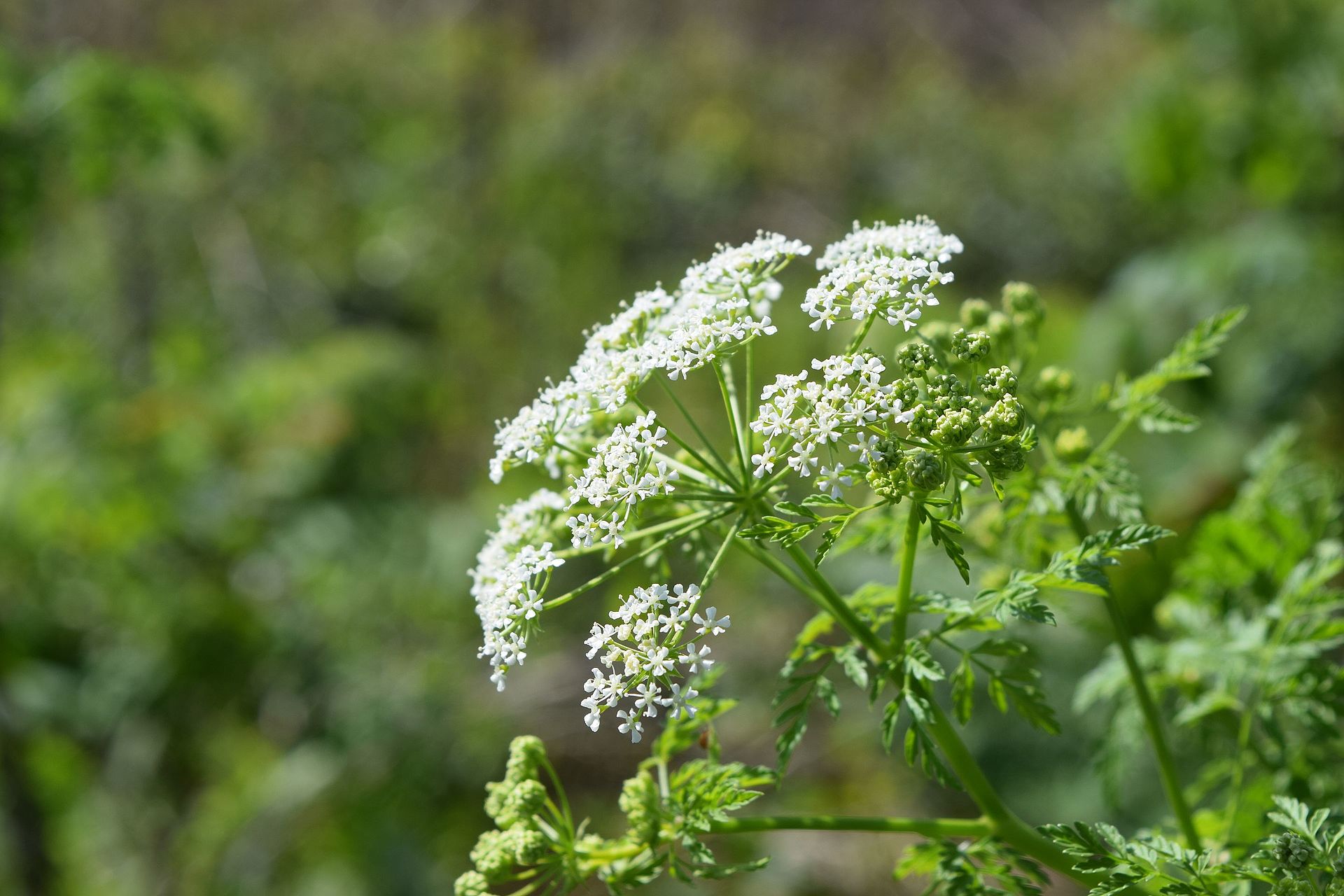
The dangerous weed, which has small clusters of white flowers and a distinguishing purple stem, is especially prevalent along roadways, railroad tracks, ditches, and flood plains, Hartschuh said but is also spreading to other areas as well.
Although it often resembles other members of the parsley family, it should not be confused with wild carrots or the delicate blooms of Queen Anne’s Lace, Hartschuh said. Poison hemlock is a biennial, which can grow up to seven feet tall, he said.
Sap from the plant can cause blisters, a serious rash, or even death in humans if it’s ingested, Hartschuh said. Farmers should also be on the lookout for it in hayfields and other areas where animals graze so they don’t get sick either, he said.
Josh Dyer, director of the Crawford Park District, said it’s difficult to say why the poisonous plant is so prevalent in North Central Ohio this year. “Seeds are easily moved. They’re taking over areas they haven’t been in before,” Dyer said.
Besides digging it up before it goes to seed, Dyer said, pesticides and herbicides are effective in killing the dangerous weed and breaking its cycle. But he warned against burning it because the chemicals it emits can get into the air and lungs.
Hartschuh suggested property owners wear gloves, long-sleeved clothing, and even a face shield or protective goggles if they plan to dig it up. “It’s important to be diligent and work to control it so it doesn’t spread to other areas where kids play,” he said.
Since the plant reproduces in its second year, Hartschuh said, it’s better to treat it in the fall before the bulbs reproduce for another growing season. “If people try to kill it chemically, it’s hard to do that now,” he said.
Dyer said the key is to first properly identify poison hemlock and then keep it away from the skin, face, and eyes since all parts of the plant are toxic, especially the roots and seeds.
“Plants expand in their range, but the seed banks are eventually going to run out sooner rather than later.”